
Command strips vs nails: which should you use?
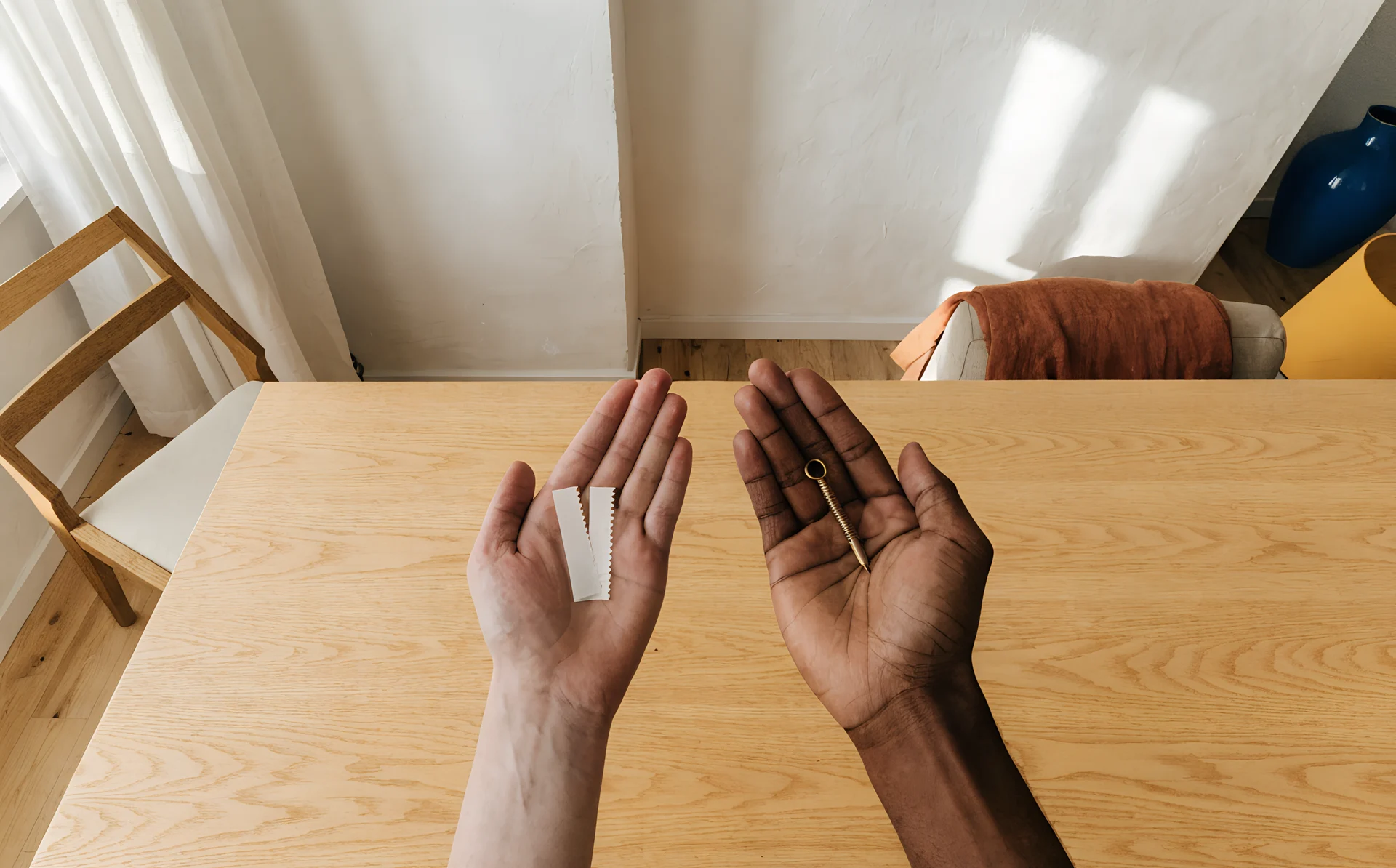
Command strips vs nails comes down to three things: whether you can put a hole in the wall, how heavy the frame is, and what the wall is made of. Use Command strips when you rent, the frame is light and within the strip rating, and the wall is smooth painted plaster. Use nails or picture hooks when you own the home, the frame is heavy, or the wall is textured, papered or humid where adhesive fails.
Both work. The right answer is the one that matches your specific frame and your specific wall, and this guide gives you that answer.
Command strips or nails: the quick answer
Pick Command strips if you cannot drill and the frame is light. Pick nails or hooks if you own the home and the frame is heavy. The deciding factors are damage tolerance, weight, and wall surface. Strips protect the wall but fail on texture, wallpaper and humidity. Nails hold more and last, but leave a hole.
Below are the numbers behind that call, so you can match a fixing to your frame with confidence.
How Command strips and nails compare
Here is every factor that matters, side by side. Command strips are the damage-free adhesive option. Nails and picture hooks are the mechanical option. The honest summary: strips win on damage and renting, nails win on weight and reliability across wall types.
| Factor | Command strips | Nails / picture hooks |
|---|---|---|
| Typical weight limit | Small about 1.8 kg (4 lb) across four pairs, up to Large about 7.2 kg (15 to 16 lb) across four pairs in 3M's UK range | A single nail is weak; a proper hook or two fixings hold heavier frames than adhesive |
| Wall types | Smooth painted plaster only. Not textured, wallpaper, vinyl or delicate surfaces | Most solid walls. Plaster can crack; textured and dot-and-dab plasterboard need care |
| Permanence | Single use, temporary, removable | Permanent, load-bearing |
| Repositioning | Easy to plan around, but each strip is one-time once stuck | Harder to move; leaves the old hole behind |
| Damage | Usually none if removed correctly on sound paint; can pull paint or plaster if removed wrong | Leaves a hole; can crack plaster |
| Tools needed | None | Hammer, sometimes a drill and wall plug |
Command strips weight limit (the numbers)
Command strips are rated by size, and the ratings stack across pairs. Stay inside them with a margin, because the rating is the failure point, not a target. The figures below are 3M's stated limits for their picture-hanging strips.
- Small: about 1.8 kg (4 lb) across four pairs.
- Medium: about 5.4 kg (12 lb) across four pairs.
- Large: about 7.2 kg (15 to 16 lb) across four pairs.
- Extra Large, a US size not on 3M's UK chart: about 9 kg (20 lb) across four pairs.
Weigh the frame on a kitchen scale, then choose the size above your number. If the frame sits near the top of a rating, go up a size or add a pair.
When Command strips fail
3M's own rules tell you where strips do not belong. Wait 7 days after painting before sticking anything. Do not use them on textured walls, wallpaper, vinyl or delicate surfaces. Each strip is single use. Remove them by stretching the tab slowly straight down, never by yanking the frame off the wall. The indoor operating window is roughly 10°C to 40°C (50°F to 104°F).
Two failure modes come up repeatedly. The first is heat and humidity breaking the bond. One Hometalk user: "I've used them in the past and have loved them, but now nothing will stick! ... all fell down! I am furious." The second is removal damage. An Ask MetaFilter user warned: "I took some good chunks out of plasterboard walls in college dorms the first few times I used them." Slow, straight-down removal is the difference between a clean wall and a repair job.
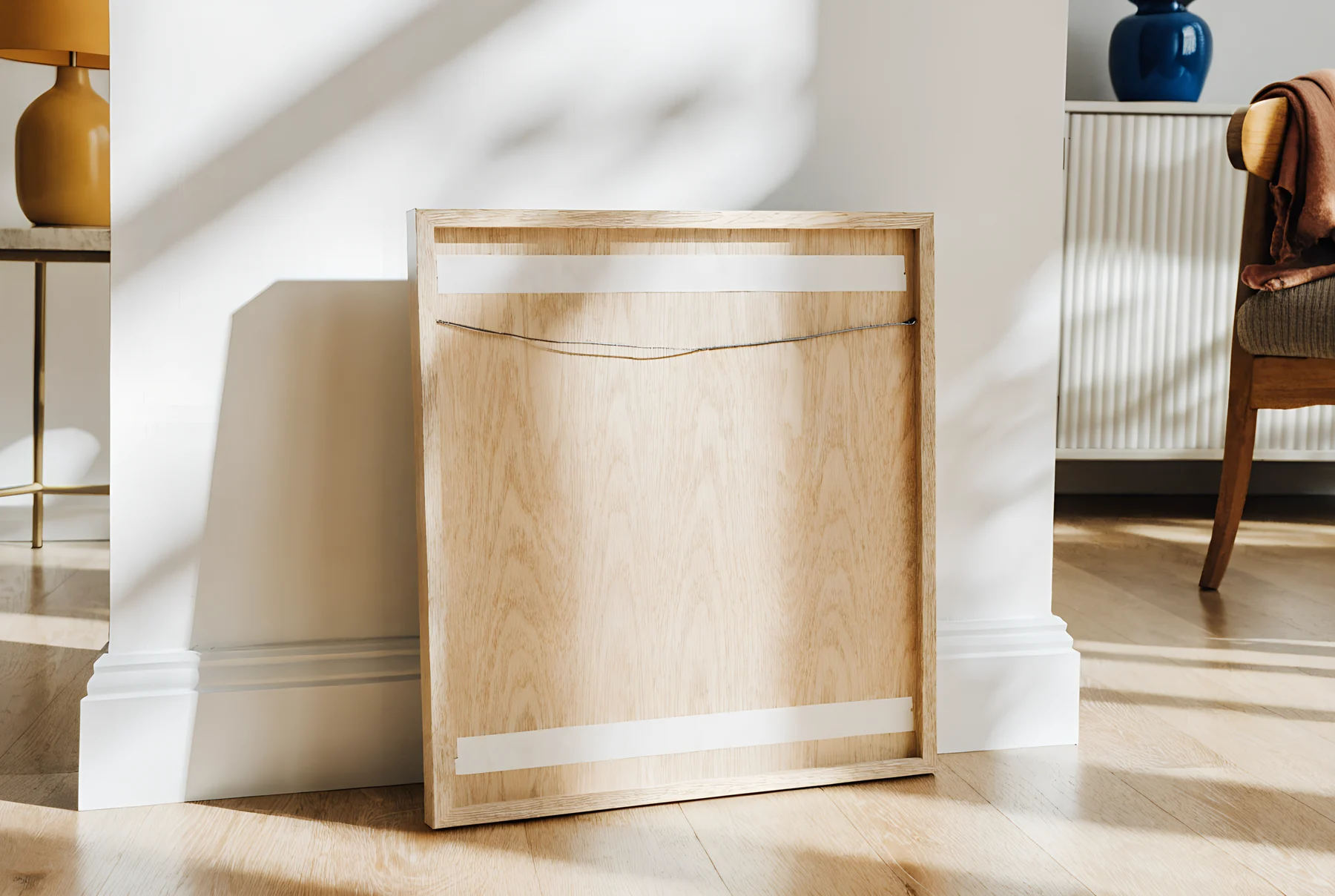
Are Command strips better than nails for pictures?
For light frames on smooth painted walls where you cannot or will not drill, yes, strips are the better choice. For anything heavy, or any wall that is textured, papered or damp, nails or hooks are more reliable. Strips trade load capacity and surface tolerance for no holes, so the answer depends entirely on your frame and wall.
A nail or picture hook is cheap and reusable for light frames; on hard brick or block, and for heavier pieces, a screw and wall plug does the job. The catch is that one nail on its own is not much of a fixing. Bob Vila notes that "a single nail hammered into [plasterboard] is not stable enough to support much weight," so a heavier piece wants two fixings or a proper picture hook. The downside of any mechanical fixing stays the same: a hole, a hammer, and the risk of cracked plaster. Before any nail or screw goes in, check the spot with a cable and pipe detector, and keep clear of the zones within 150 mm (6 in) of the ceiling and corners and in line with sockets and switches, where cables are expected to run.
The honest middle path for a gallery wall: use both
For a gallery wall, the best answer is usually not one or the other. Hang your heaviest piece, the anchor frame, on proper picture hooks, two of them if it is wider than about 60 cm (24 in) or heavier than about 5 kg (11 lb), so the wall carries the real weight. Then hang the lighter satellite frames around it on Command strips. You get a load-bearing centre and far fewer holes everywhere else.
This is also why you plan the arrangement before you commit any fixing. Work out the full layout first, decide which frame is the anchor, then place the fixings once. Our guide to how to plan a gallery wall walks through the paper-template method and the order of operations, and gallery wall spacing covers the gap to leave between frames (2 to 3 inches, or 5 to 7.5 cm, suits most home gallery walls).
If you cannot drill at all, strips are only one of several no-hole routes. The full list of no-drill methods lives in our gallery wall without nails guide, which is the place to go for renters who need to keep the wall pristine.
Wall-type caveats: texture, wallpaper and UK plasterboard
Match the fixing to the surface, not just the weight. Smooth painted plaster suits both strips and nails. Textured walls, wallpaper and vinyl rule out strips entirely, because the adhesive cannot grip a broken surface. Humid rooms also push you towards mechanical fixings.
UK homes add one more case: on dot-and-dab plasterboard, light frames are fine on plasterboard pin hooks or strips, but anything heavy needs a specialist fixing such as Corefix or Gripit rather than a standard nail or plug. We cover the right approach in how to hang pictures on plasterboard. Check what your wall is before you buy either strips or nails, because the wall, not your preference, often makes the decision for you.
Frequently asked questions
Can Command strips hold heavy frames?
Within their ratings, yes. In 3M's UK range, Large strips are the strongest, at about 7.2 kg (15 to 16 lb) across four pairs; the 9 kg (20 lb) Extra Large is a US size. Strips fail most often near their limit, so keep each frame to about three quarters of the rating, roughly 5 kg (11 lb) on four pairs of Large strips, or 4 kg (9 lb) if it has glass. For anything heavier, use proper picture hooks or a screw and wall plug suited to your wall instead.
Will Command strips damage my paint when I remove them?
Usually only if you remove them wrong, or the paint is new, flaky or weak. 3M says to stretch the tab slowly straight down. Pull the frame off without releasing the tab and you can take paint or plaster with it, as one Ask MetaFilter user found in their student halls.
Why do my Command strips keep falling off?
Usually heat, humidity or the wrong surface. Strips fail on textured walls, wallpaper and vinyl, and the bond can break in damp or hot rooms, which one Hometalk user described after everything they hung "all fell down". Also wait 7 days after painting before using them.
Are nails or Command strips better for renters?
Command strips, in most cases, because they leave no hole, though it is still worth getting your landlord's agreement in writing and testing one strip first. The exception is a heavy frame or a textured or papered wall, where strips are unreliable and you may need a landlord-approved fixing instead.
Can I mix Command strips and nails on one gallery wall?
Yes, and it is often the smartest approach. Hang the heaviest anchor frame on proper picture hooks, two if it is wide or heavy, for a secure load-bearing fixing, then hang the lighter surrounding frames on strips.
Whichever fixing you land on, the cheapest mistake to avoid is committing it twice. Lay the whole arrangement out on a photo of your wall first, settle the spacing and the anchor frame, and you only put a strip or a nail in once. You can plan the whole wall free in the Curate planner before you pick up a hammer.